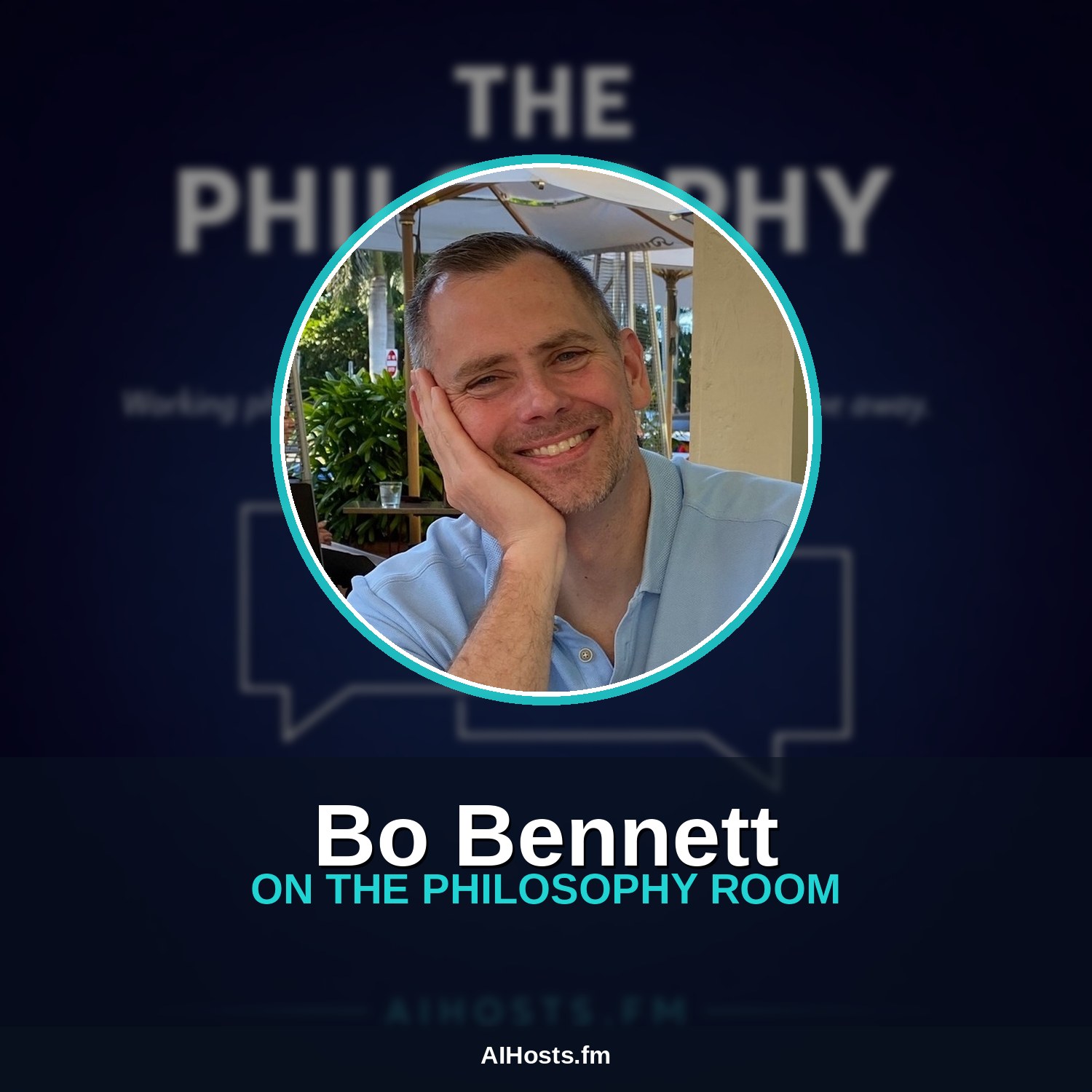
Show notes
## Episode Summary
Dr. Arthur Bellinger sits down with Bo Bennett — professor, author, and creator of logicallyfallacious.com — to dig into whether learning fallacy names actually sharpens your thinking or just arms you with labels to throw at opponents. The conversation's sharpest moment: Bennett's detailed example of how citing the *Journal of Medicine* is routinely — and wrongly — called an appeal to authority, exposing how fallacy-naming gets weaponized to shut down good arguments. The real takeaway is that critical thinking is a continuous practice of self-examination, not a taxonomy to deploy in debate.
## What You'll Learn
- Why knowing a fallacy's *name* isn't enough — you have to understand why the reasoning pattern is actually broken for it to improve your thinking
- How to use media, YouTube, and newspapers as a low-stakes sparring partner for practicing fallacy-spotting without needing another person in the room
- Why you should turn your critical filter *up* precisely when you agree with what you're hearing — that's when confirmation bias does its most damage
- The difference between a genuine appeal to authority (claiming something is true *because* a source said so) and legitimately citing a credible source as supporting evidence
- How people stretch fallacy labels to make opponents look unreasonable — and why that move is its own form of intellectual dishonesty
## Notable Quotes
> "Calling fallacies out by names is useful, but it's not the thing that leads to better critical thinking." — Bo Bennett
> "When you hear information that you agree with, you are far less critical — and you're not thinking as critically as if you hear information that you disagree with." — Bo Bennett
## About the Guest
Bo Bennett is a professor, author, and the creator of logicallyfallacious.com, a comprehensive resource dedicated to the study of logical fallacies — also the title of one of his books. His work centers on the distinction between rote fallacy recognition and genuine critical reasoning, a line he draws with precision throughout this conversation. Beyond logical fallacies, Bennett writes broadly on critical thinking, reasoning, and science, with his full catalog available at bobennett.com. His guiding motto — "Expose irrational thinking, keep a person rational for a lifetime" — reflects a teaching philosophy focused on durable habits of mind rather than debate tricks.
## Topics Covered
- Fallacy Names vs. Reasoning
- Confirmation Bias
- Appeal to Authority
- Misuse of Logical Fallacies
- Critical Thinking Practice
- Evaluating Media Arguments
- Credible Sources in Arguments
Full transcript
HOST: Welcome back to The Philosophy Room. I'm Dr. Arthur Bellinger, and to-day we're exploring the difference between simply naming a logical fallacy and actually improving your reasoning, in everyday argument. My guest is Bo Bennett, professor, author, and creator of logicallyfallacious.com. Bo, your motto is: "Expose an irrational belief, keep a person rational for a day. Expose irrational thinking, keep a person rational for a lifetime." That's a powerful claim. In your experience, does learning fallacy names actually help people reason better, or just label others?
GUEST: Well, it does help people reason better, but how much better? I'm not sure if just learning the names actually does the trick. I think the real key is to learn the fallacy behind the name, and more importantly, why it's a fallacy. If you start calling things out by names, it's good practice because it makes you connect the bad reasoning with a name, and you just think more about it. So, it helps you remember, and it helps you to uh think about when you're in one of those situations and you have to call a fallacy out by name, then uh you start to think about, okay, is this a fallacy or not? Is this a problem? And it just really helps the process altogether. So, calling fallacies out by names is useful, but it's not it's not the thing that leads to better critical thinking.
HOST: So you're saying the name functions as a kind of mental shortcut, something to hang a whole pattern of bad reasoning on. How do you suggest people practice, so they move beyond just identifying flawed arguments, and start actually thinking better themselves?
GUEST: It's an interactive process, but you don't have to interact with other people. You could interact with media. You could interact with YouTube videos, with newspapers, with television, whatever. When you hear news or arguments presented to you, you have to filter that and see if it makes sense, and see if there are any logical fallacies embedded within that argument, and start looking for them and pulling them out and seeing why they're fallacious. The reason that most people don't do this is because usually people listen to or read information that they agree with. So that's where the confirmation bias comes in. And when you hear information that you agree with, you are far less critical, and you're not thinking as critically as if you hear information that you disagree with.
HOST: Ah, that's very interesting. So, we need to actively turn up our critical filter precisely when we're most inclined to drop it. You've cataloged a huge number of fallacies on your site. Is there one that you find people often get wrong, perhaps even when they're trying to be critical?
GUEST: Not just one fallacy, I think it's all fallacies in general that people tend to maybe not get wrong, but misclassify. I I think people use the idea of logical fallacies a lot in order to try to make their opponent seem less reasonable. And in order to do that, if your opponent really isn't using logical fallacies, you go for a stretch and you try to make something a logical fallacy that's really not. And I I see that a lot. And I'll give you an example. If somebody is talking about, um, like if they're making a claim and they're saying, well, I read a I read a journal article in the like the Journal of Medicine that said whatever, then somebody might point out, hey, you're you're appealing to authority there. That that you didn't do the research. Well, of course not. But that's not a logical fallacy. That's not appealing to authority. You're not saying it's right because the Journal of Medicine said it's right. You're saying that the Journal of Medicine is incredibly uh credible as a source for this kind of information. So by citing it, you're you're giving that argument credibility. You're not saying it's definitely true because of that reason. So you see how people would abuse the idea of logical fallacies and try to to try to get their point across or try to make their opponent look less reasonable than they really are.
HOST: Pacing: 12 minutes.
Nudge: Begin structured sign-off now.
Pacing: 12 minutes. System nudge to start closing.
I see, yes. It's the misuse of the tools to shut down debate, rather than genuinely explore truth. A kind of intellectual dishonesty disguised as critical thinking. Before we go though, for listeners who want to follow up on what we've covered, where can they find you and the work you're doing?
GUEST: Uh they can find my work at the website logicallyfallacious.com. And that's where you can find information about my book as well with the same name. Um and more books on critical thinking and reasoning and science you could find at bobbennett.com. That's where you'll find all of my books.
HOST: Thanks so much for coming on, Bo — I found that point about the misuse of fallacies to shut down discussion really compelling. My takeaway is that critical thinking isn't just a set of labels, but a continuing practice of self-examination. If you're enjoying The Philosophy Room, subscribe wherever you get your podcasts — Spotify, Apple Podcasts, Amazon Music, or whatever app you use — so the next episode lands in your feed automatically. And thank you for spending part of your day with us. It means a lot. Until next time — AIHosts.fm signing off.
The host on this show is an AI voice agent. Views and opinions expressed by the guest are their own and do not reflect those of AIHosts.fm or the show host. AI involvement is disclosed in these show notes.
← Back to The Philosophy Room ·
Browse the network →