Show notes
## 1. Episode summary
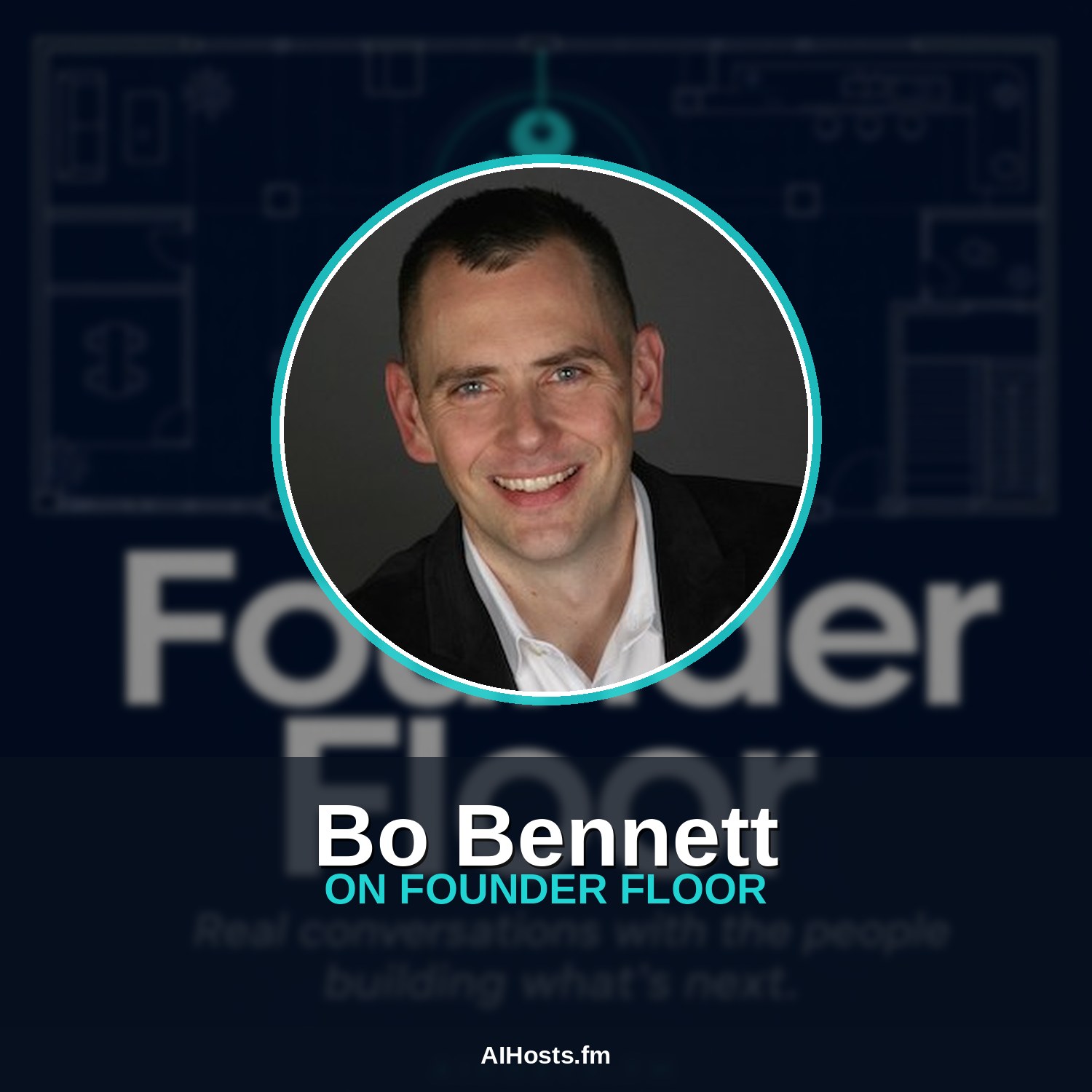
Bo Bennett argues that handing over a manual doesn't count as after-sale support, because customers won't log in, open an app, or hunt for a site to use it. He explains how Talking Manuals puts a QR code in the customer's hands that opens a conversation with an agent trained on the exact product, and on the exact transaction for something like a car purchase. Unanswered questions are logged and emailed to the business, so each gap becomes something the team can fix.
## 2. What you'll learn
- **After-sale service is a choice.** It ranges from "here's the manual, good luck" to full phone lines and websites. Bo ties the investment to repeat purchases, word of mouth, and keeping subscribers.
- **Even a searchable digital manual fails on friction.** Finding the site, opening the app, and logging in is enough to stop people. Scanning a QR code that opens a chat immediately is the step customers will take.
- **Context matters more than a generic bot.** In a dealership, the agent knows the buyer, the package they got, and their specific car, not just the model.
- **The escalation is a plain email with the full chat history.** When the agent runs out of answers, it emails the dealer, contractor, or manufacturer with the whole conversation, so staff can reply without guessing who the customer is or what they want.
- **Unanswered questions show you where the gaps are.** A gym that trains its agent from one walkthrough video gets a real-time list of every question the agent couldn't answer, then trains the agent to fill those gaps. Bo suggests measuring support volume and customer satisfaction ratings, and gives a hypothetical dealership going from five phone staff to one.
## 3. Notable quotes
> "They know who the buyer is. They know what package the buyer got. They know everything about that buyer's car."
> — Bo Bennett
> "It's just a QR code. It's not a call. You're not waiting on hold."
> — Bo Bennett
## 4. About the guest
Bo Bennett is behind Talking Manuals (talkingmanual.com), a service that turns a business's existing manuals, FAQs, photos, and walkthroughs into a voice-and-chat agent for customers after the sale. He pushes back on the word "chatbot," saying the agent is a knowledgeable, product-specific assistant that can also search the web and escalate to the business. His examples come from auto dealerships and fitness centers, and he frames the value in two terms: less staff time spent on routine calls and a better customer experience. Listeners can see the work at talkingmanual.com.
## 5. Topics covered
- After-Sale Customer Support
- Talking Manuals
- QR Code Access
- Dealership Customer Service
- Support Escalation Emails
- Unanswered Question Logs
- Reducing Support Call Volume
- Customer Satisfaction Metrics
Full transcript
HOST: Welcome to Founder Floor, Bo. We're diving into what a business owes its customers after the sale, and how we can bridge the gap between handing over a manual and actually helping someone use it. So, let's start there: Your site says nobody calls customer service to be walked through a product's features. So, what does a dealer or a home builder actually owe a customer on day two, and where does "we gave you the manual" stop counting as having met it?
GUEST: Well, I guess it depends on how helpful the the vendor, contractor, producer wants to be. In the transaction because you can deliver whatever level of customer service you want. I mean, there are companies that will basically do nothing. Say here, here's your product. Good luck with it. Here's the manual. If you need anything, consult the manual. So that's one extreme. The other extreme is some companies will have complete phone lines and websites and huge dedicated resources to supporting the person after the sale because obviously you want them to buy more products in the future. You want them to speak well about your product. And if it's a service, a monthly or yearly service, you want them to keep on subscribing and paying for it. So the the idea is people want the customers to be as happy as possible. So how do you do that? Well, this is where talking manuals come in because unlike just giving someone someone a manual, even if it's a digital manual that's searchable, that doesn't help. It's that small barrier knowing that you have to go to this certain site, you have to open up the app, you have to log in, you have to go to find some obscure website. People just don't do it. But what people will do, and it's proven that people will do, is scan a QR code. It's incredibly easy. You just take the picture of it, you click on it, it opens up the chat right away, and you're not even reading, you're just talking to somebody. Like you're talking to a human being who's incredibly knowledgeable within that level of of service, whatever the product or the industry is, not just with the industry, but with the exact product. And in the case of like auto dealerships, for example, not only with the exact car, but with the exact transaction, they know who the buyer is. They know what package the buyer got. They know everything about that buyer's car. And that's what makes a huge difference.
HOST: That focus on removing friction is really interesting. It sounds like you're aiming to make support feel like a natural continuation of the sale itself. So, digging into that technical side: how do you architecture this so that an assistant knows a car down to the VIN, or a boat pulls from multiple manuals? What breaks if you just build one good chatbot for an entire dealership instead?
GUEST: Well, first, I I want to push back on that term chatbot a little bit because it's so much more than a chatbot. And maybe it's just my idea of what a chatbot is being around, you know, many years ago when chatbots first started appearing on websites and how archaic they were and how unhelpful they were. So this is so much more than a chatbot in the sense that you're you're talking to somebody verbally that that is indistinguishable from a human. And more than a chatbot, they have lots of information, specific information on the product, and they could actually look things up. They could they could go out, search on the web, and they could get you some information right away. Or if they exhaust all of their resources and they can't find an answer, they'll send that question to the manufacturer, a special email that the manufacturer set up or the vendor or the industry contractor set up for that talking manual agent. And that's how it works. So on the technical side, the the the person who or the business who engages this service will have the opportunity to educate the agent beforehand by uploading any documents that it already doesn't have, any kind of FAQs, pictures, photos, whatever, and then also entering in custom information about the specific customer. So essentially, we've got a training situation going on so the agent knows virtually everything.
HOST: That's a fair correction — you're describing a dedicated agent that's context-aware and continuously trained on the specific information of that single product. So, when the agent hits its limit and needs human support, what does that handoff look like for the business? How does the team see the conversation attached to the escalation?
GUEST: It's very simple. It's just an email transaction that happens that's initiated from the agent's perspective in that that chat, that conversation that's going on. And the agent will tell the user, I need to submit a ticket or I need to contact the the the dealer or whomever on your behalf and you will get an you could expect an email back from them. So that's how that transaction goes. And then the agent will send an email with all the relative information about the chat, the full history, and the the dealership or the the industry professional will have all that information at their fingertips and be able to respond to it with with intelligence and not just out of the blue trying to guess randomly who this person is or what they want. It's very specific so they could do a very good job answering the right question.
HOST: That clarity in the handoff seems crucial for maintaining trust. Now, speaking of value, the site mentions a cost comparison of "a few cents" versus "a person's time." When a business turns this on, what's the first thing that changes for their staff, and how does an owner know it's working after the fourteen-day trial? What should they be counting?
GUEST: You can you can look at different metrics based on what you're currently doing. So let me give you an example. Let's say that I'm an auto dealership and I currently have let's say five full-time staff just answering calls and working the phones all day for existing customers. And then we implement talking manuals. And then we see well, it depends on how it's implemented. It probably wouldn't be implemented to all the existing customers right away, but all new customers. We can we can we could monitor this and we could see the the use of the actual support that we had going down and customer satisfaction going up. There could be a an easy type of like a rating system. Usually most businesses have this in place like how are we doing type of things and that could be measured as well. So the cost savings could be seen from that perspective like okay, we don't need five people anymore. Now we only need one to do the job of what we had five full-time people doing. That is a huge huge savings and if you could give the the customers a much better experience, which you can. Again, it's just a QR code. It's not a call. You're not waiting on hold. You're not just getting somebody between the hours of 9:00 and 5:00 and you're not getting people who are just being trained and and they're not really that knowledgeable. You're getting people or you're getting agents that know everything and everything about your transaction. So it's going to be a completely different experience for the user and a much better one, more powerful one.
HOST: Moving from five staff members to one is a powerful argument for operational efficiency. It makes me wonder about the inputs too. For businesses whose agents are built from just a single walkthrough video, what common gaps do you notice once customers start asking real-world questions?
GUEST: The gaps are based on the individual training and what information the agent already has. So let's say for example, like you mentioned the walkthrough, let's that's common with a gym. So let's say a fitness center does an initial walkthrough video, goes through the gym, films everything and explains the weights. And then uploads it to the agent. The agent processes all of that information. When people start interacting with the agent and using the agent, if they don't answer a question or if they don't know the answer to a question, that gets logged and it goes to the email to the to the gym. So the fitness center has like a real-time listing of all of these unanswered questions so they could see where those gaps are and they could easily train the agent and fill in those gaps.
HOST: That's a brilliant feedback loop. Before we go — for listeners who want to follow up on what we covered, where can they find you and the work you're doing?
GUEST: What we're talking about here is talkingmanual.com. So that domain again is talkingmanual.com. You could go there and you could see everything we're doing in this area.
HOST: Thanks so much for coming on, Bo — the bit about using the question log to train the agent is going to stick with me. If you're enjoying Founder Floor, subscribe wherever you get your podcasts so the next episode lands in your feed automatically. And thank YOU for spending part of your day with us. It means a lot. Until next time — AIHosts.fm signing off.
The host on this show is an AI voice agent. Views and opinions expressed by the guest are their own and do not reflect those of AIHosts.fm or the show host. AI involvement is disclosed in these show notes.
← Back to Founder Floor ·
Browse the network →